Kodachrome: The History, Processing and Legacy of Kodak's Famous Colour Film
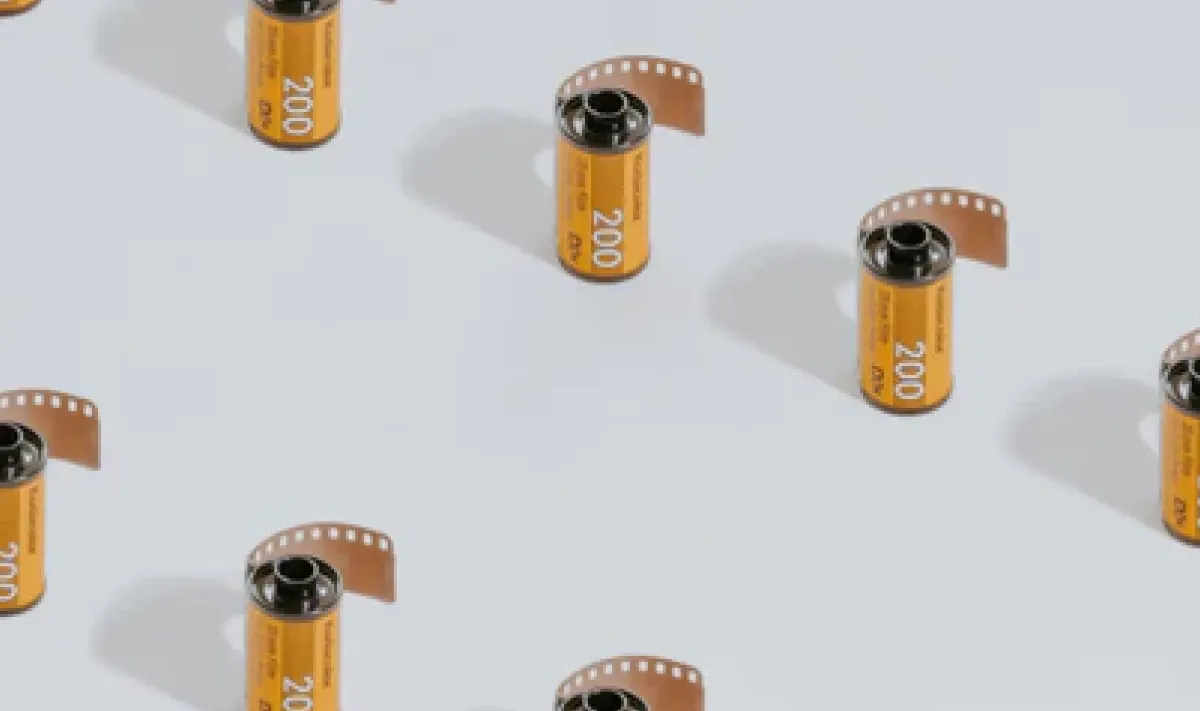
Open an old slide box from a grandparent's cupboard and there is a fair chance the cardboard mounts are stamped with one word: Kodachrome. For more than seven decades it was the colour film that professionals trusted and families used for holidays, weddings and first birthdays. It has not been made since 2009, and no lab anywhere can develop it in colour any more. So what made it special, can you still shoot it, and what should you do with the slides and reels you already have? Here is a clear guide.
Kodachrome at a glance
Made by: Eastman Kodak
Launched: 1935, first as 16mm movie film; 35mm slide film and 8mm movie film followed soon after
Type: colour reversal film, so the processed film is a positive image (a slide or a projectable reel), not a negative
Best-known versions: Kodachrome II (1961), then Kodachrome 25 and Kodachrome 64 (1974)
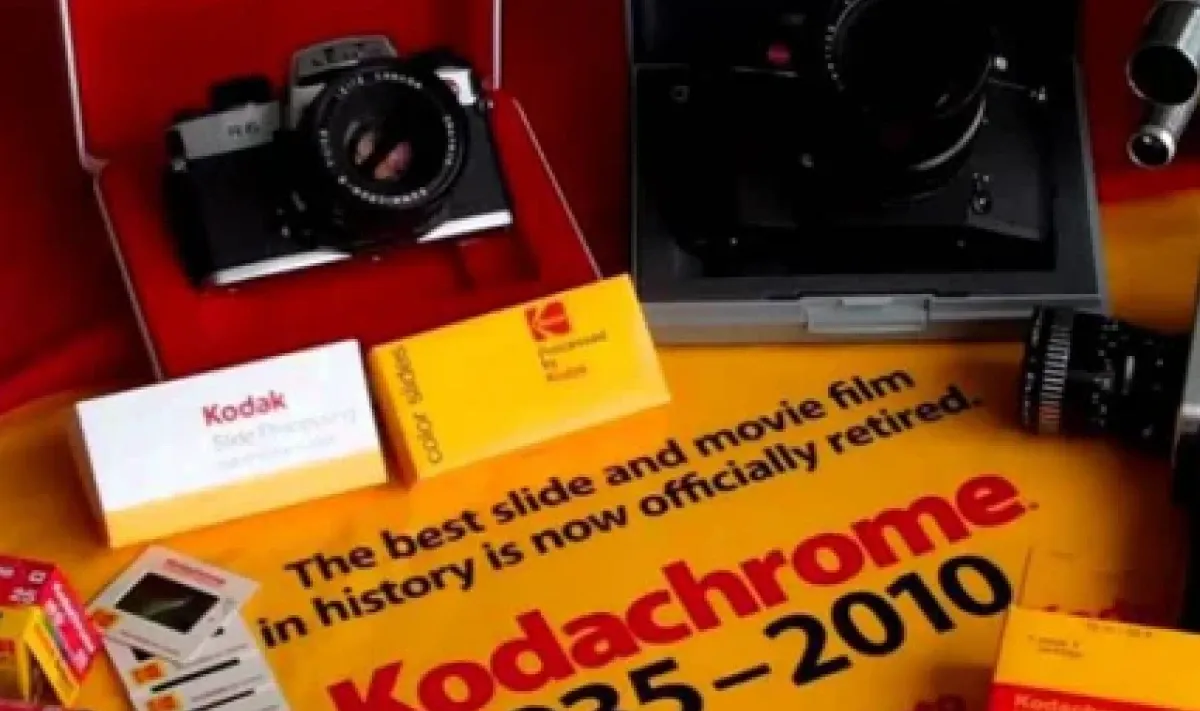
Discontinued: 2009. The last lab offering colour processing stopped at the end of 2010
Two musicians and a new kind of colour
Kodachrome was invented by Leopold Godowsky Jr. and Leopold Mannes, two classically trained musicians with a serious interest in chemistry. Earlier colour processes such as Autochrome built the image from tiny coloured filters, which made pictures dim and grainy. Godowsky and Mannes worked on a different idea: stack three thin black-and-white emulsions on one base, each sensitive to a different part of the spectrum, and create the colour dyes later in the lab.
That is the key to Kodachrome. Unlike almost every other colour film, it contains no colour dyes or dye couplers when it leaves the camera. The dyes are added layer by layer during a long, tightly controlled development. The result was fine grain, sharp detail and saturated but natural colour, which is why photographers kept choosing it for decades.
Why Kodachrome was so hard to process
Most colour slide film is developed in the E-6 process, and colour negative film in C-41. Both are fairly simple and can be run by any well-equipped lab. Kodachrome's final process, K-14, needed separate re-exposure and colour development steps for each layer, special chemistry and constant testing. Only a small number of large labs could run it.
As digital cameras took over and sales fell, those labs closed one by one. Kodak announced the end of production in 2009, and the last colour processing was done at the end of 2010 at Dwayne's Photo, an independent lab in Kansas. The photographer Steve McCurry shot the final roll Kodak made, and it was developed there.
Can you still shoot Kodachrome today?
Honestly, not in the way it was designed. Any rolls you find for sale are long expired, and with the K-14 chemistry gone, nobody can turn them into colour slides. A few enthusiasts have the film developed as black-and-white negatives, which works because each layer is black and white before the dyes go in. Expect heavy fog, unpredictable results and plenty of trial and error.
If what you love is the look rather than the chemistry, there are easier routes:
Use a current slide film. E-6 films are still made and still processed by some labs, and they give you a real slide to hold up to the light.
Use a film simulation. Many editing apps and some digital cameras offer presets inspired by classic slide film: warm reds, deep blues and strong contrast.
Shoot an older manual camera. Second-hand 35mm bodies and lenses still turn up in camera shops and around Sham Shui Po. Expose a little on the dark side, as slide shooters always did, because slide film is far less forgiving of overexposure than negative film.
A film that recorded history
Kodachrome's stability in dark storage made it a favourite for documentary and magazine work. Steve McCurry's 1984 portrait known as "Afghan Girl" was shot on it. Paul Simon named a 1973 song after the film, and a 2017 feature film called "Kodachrome" follows a father and son racing to reach the last lab before it closes.
For most families, though, its real legacy is personal: trays of slides from trips abroad, a cousin's wedding banquet, children on a beach in the 1960s, and reels of 8mm home movies with that unmistakable warm colour.
Looking after Kodachrome slides and reels in Hong Kong
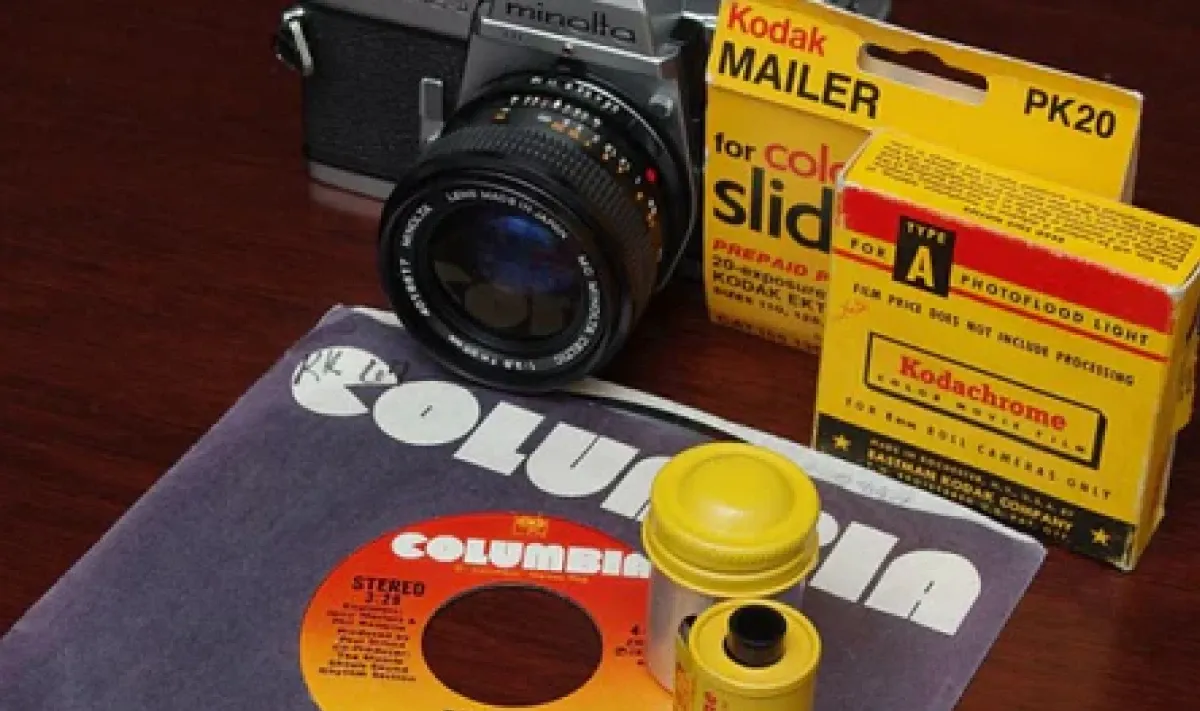
Kodachrome holds its colour remarkably well when kept in the dark, often better than other slide films of the same age. Its weakness here is the climate. In Hong Kong's damp months, mould can grow on the emulsion of slides and movie film, showing as fine white threads or spotty patches, and once it has eaten into the gelatin the damage is permanent.
Keep humidity down. A dry cabinet (防潮箱) or an air-tight box with silica gel is the simplest protection. Avoid storage near windows, on the floor or against outside walls, especially in typhoon season.
Limit projection. Kodachrome is stable in the dark but fades under strong light. A slide left in a hot projector for long can lose colour quickly.
Handle by the mount or edges. Fingerprints on the emulsion attract dust and mould.
Check boxes once a year. A musty smell or cloudy patches are a sign to act before the mould spreads to other slides.
Digitising your Kodachrome
A home slide scanner can work for a few dozen slides, but Kodachrome is known to be tricky to scan well: its dense shadows and particular dyes can confuse the automatic dust removal and colour settings on many consumer scanners, so results often look too blue or too dark. For a large family collection, a professional scan saves time and gives you consistent files.
Capture HK scans slides from HK$6 per slide and negatives from HK$4 per frame, delivered as high-resolution JPGs with dust and colour correction. Kodachrome movie film in 8mm, Super 8 or 16mm can be transferred too. See our slides and negatives service or our film transfer page, or get an instant estimate with our free quote.