What Does VHS Stand For? Meaning, History and What to Do with Old Tapes
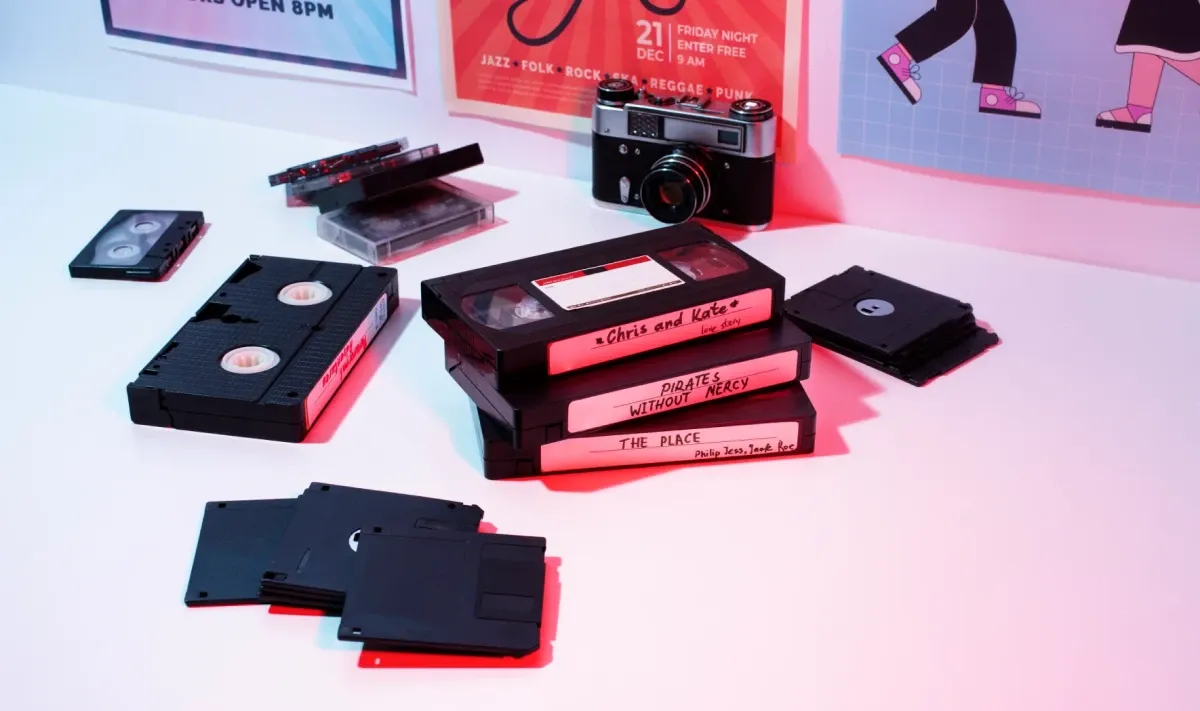
Look at the label on almost any black videotape from the 1980s or 90s and you will find three letters: VHS. Plenty of Hong Kong homes still have a shelf or a suitcase of them, filled with Lunar New Year gatherings, wedding banquets and primary-school sports days. So what do the letters mean, why did this format beat its rivals, and what should you do with the tapes you still own? Here is a plain guide.
VHS means Video Home System
VHS is short for Video Home System. The name was a statement of purpose: this was a videotape built for ordinary living rooms, not television studios. You could record a programme off the air, rent a film from the video shop, or later film your own family on a camcorder and play it all back on the same machine.
The machine is the VCR, or video cassette recorder. In Hong Kong most people just called it the video recorder (錄影機). It both played and recorded tapes.
The other letters you may see
VHS-C (C for Compact): a small cassette made for lighter camcorders. It holds the same half-inch tape and slots into a full-size VCR using an adapter shell.
S-VHS (Super VHS): a higher-resolution version launched by JVC in 1987. It needs an S-VHS deck to play back at full quality.
S-VHS-C: the compact cassette with the Super VHS picture.
PAL and NTSC: the two main colour TV systems. Hong Kong used PAL, as did the UK, Australia and much of Asia and Europe. The US and Japan used NTSC. A tape recorded in one system will not play properly on a machine built only for the other, which matters if your family moved tapes between countries.
A short history: how VHS won
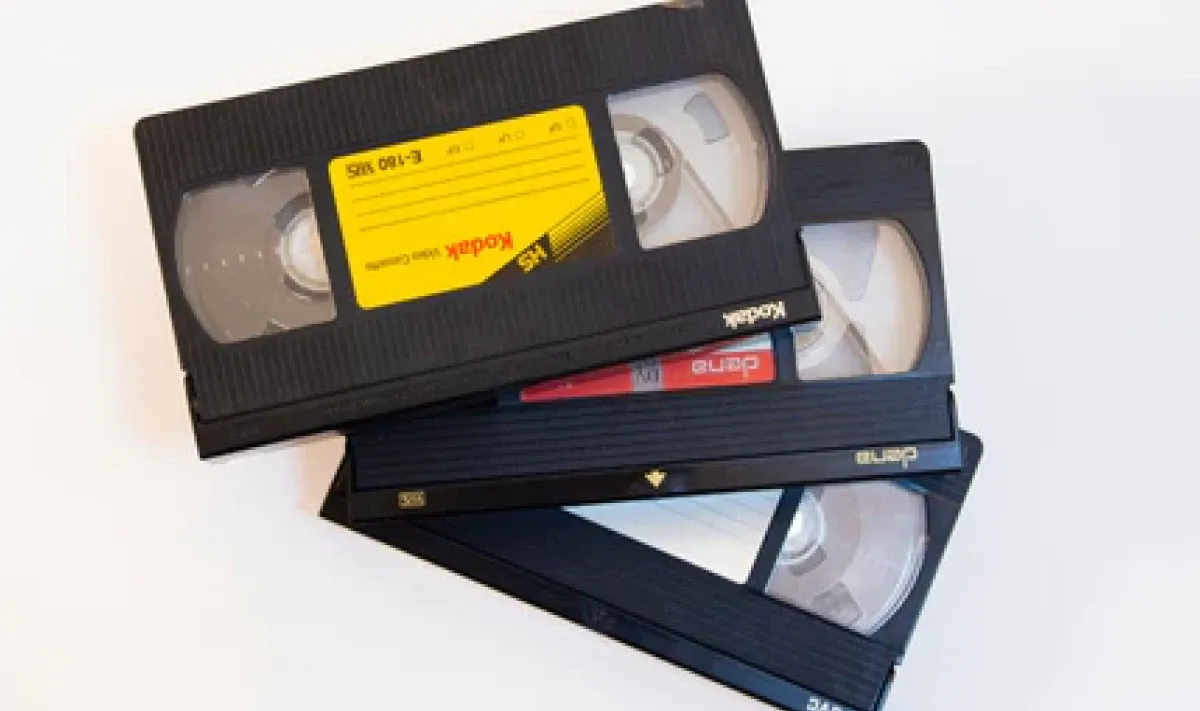
JVC (the Victor Company of Japan) launched VHS in 1976. Sony had arrived a year earlier with Betamax, and the two formats fought for the home market through the late 1970s and 80s.
Betamax was widely regarded as giving a slightly sharper picture. VHS answered with longer recording time, so a whole film or a football match fitted on one cassette, and JVC was open to licensing the format to other manufacturers. More brands making VHS recorders meant cheaper machines and more tapes on rental shelves, and that snowballed. By the late 1980s VHS was the standard almost everywhere.
Hong Kong took to home video enthusiastically. Families taped TVB dramas, rented Cantonese films from the neighbourhood video shop and, once camcorders became affordable, recorded birthday parties and trips. In the 1990s the city also embraced VCD and laserdisc, and when DVD arrived in 1996, the decline of tape began. Still, many households kept recording on VHS well into the 2000s.
How a VHS tape works
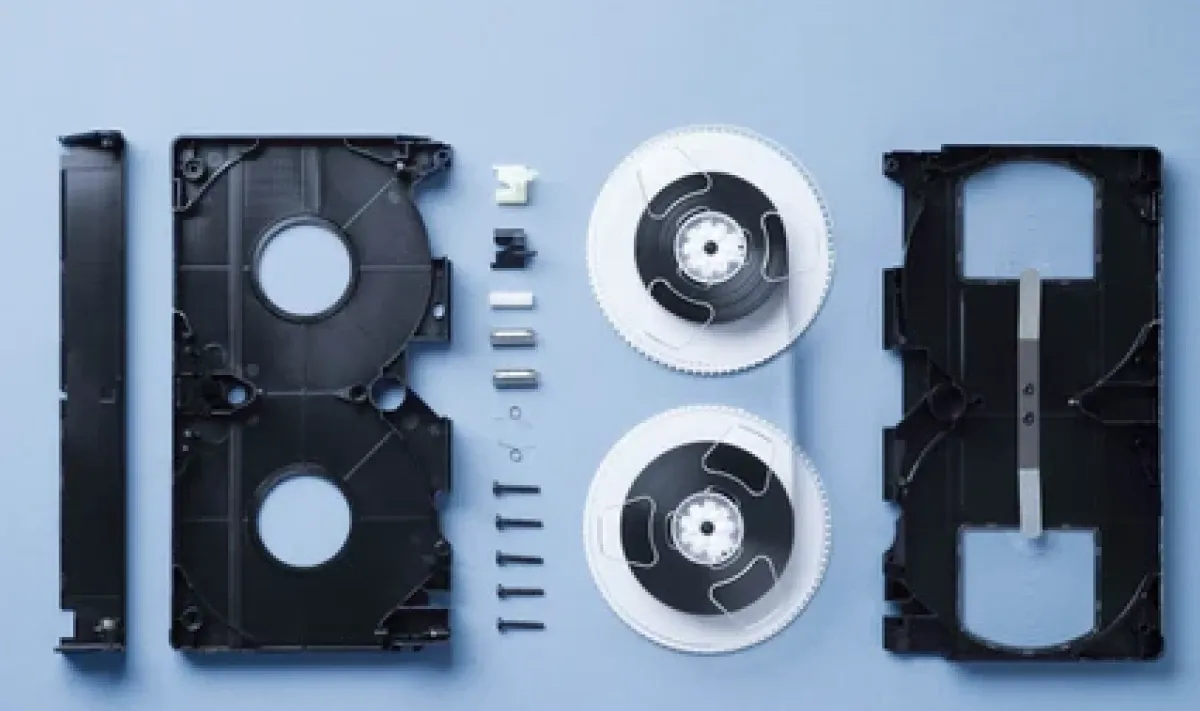
Inside the plastic shell are two reels and a strip of magnetic tape about half an inch (12.7 mm) wide. When you press play, the VCR pulls a loop of tape out of the cassette and wraps it around a spinning drum fitted with video heads. Because the drum is tilted and spins quickly, the heads write and read the picture as a series of diagonal stripes across the tape. This is called helical scanning, and it is how a slow-moving tape can hold a full TV picture. Sound and a control track run along the edges.
A few numbers worth knowing:
Running time: on PAL, the common E-180 cassette holds 3 hours at standard play (SP), and about twice that at long play (LP), with lower quality.
Picture detail: VHS resolves roughly 240 lines across the screen. That is soft by modern standards, which is why VHS looks blurry on a big flat-screen TV.
Frame rate: PAL runs at 25 frames per second, NTSC at about 30.
Why your tapes are at risk
Magnetic tape does not last forever. Over the decades the magnetic signal weakens, the binder holding the particles to the tape can break down, and every play adds wear. Hong Kong adds its own problem: humidity. For much of the year the air is damp enough for mould to grow on the tape inside a closed cassette, especially in cupboards against outside walls or in storerooms without a dehumidifier.
Signs that a tape needs care before anyone plays it:
White or grey spots or fuzzy patches on the tape visible through the window
A musty smell when you open the case
Tape that looks wrinkled, creased or loose on the reel
A cassette that was in a flood, near a leaking window in a typhoon, or stored on a damp floor
Playing a mouldy tape in an old home VCR can clog the heads and scratch the tape for good. If you see any of the signs above, stop and get it cleaned first.

Your options for old VHS tapes
Keep them safe for now
Store tapes upright like books, in their sleeves, away from windows, speakers and anything magnetic. A dry cabinet (防潮箱) or an air-tight box with silica gel packs helps a lot in Hong Kong. Rewind tapes fully rather than leaving them stopped halfway.
Copy them yourself
If you still have a working VCR, a USB video capture device and a computer can record the playback in real time. It works, but it takes as long as the footage itself, a worn VCR may chew the tape, and a cheap capture stick often gives a jittery picture. Second-hand VCRs turn up in Sham Shui Po, but condition varies a lot.
Have them digitised professionally
A specialist plays each tape on calibrated decks with time-base correction, which steadies the wobbly picture that old tapes often have, and can clean or repair damaged cassettes before playback. You get MP4 files you can watch on a phone, a smart TV or share with relatives abroad.
Collectors and VHS today
VHS has a small collector following, mainly for sealed or rare film releases and cover art. Most home-recorded tapes have no resale value, but they are the only copy of moments you cannot film again. That is the part worth protecting.
Quick answers
Is VHS the same as VCR?
No. VHS is the tape format; the VCR is the machine that plays and records it.
Can I play a VHS-C tape in a normal VCR?
Yes, with a VHS-C adapter cassette. The small tape clicks into the adapter, which then goes into the VCR.
Will my tape from the US play in Hong Kong?
An NTSC tape needs an NTSC-capable deck. Professional transfer services handle both systems.
Turn your VHS tapes into digital files
Capture HK digitises VHS, VHS-C, S-VHS, Video8, Hi8, MiniDV, Betamax and more, priced per tape whatever the length: VHS is HK$200 in SD or HK$300 in Full HD. Mouldy tapes can be cleaned first. Drop them at our Central or Lai Chi Kok store, or book a collection. See the details on our video digitisation page, or get an estimate with our free quote.