When Did the 8-Track Tape Come Out? Its Origins, Rise and Decline
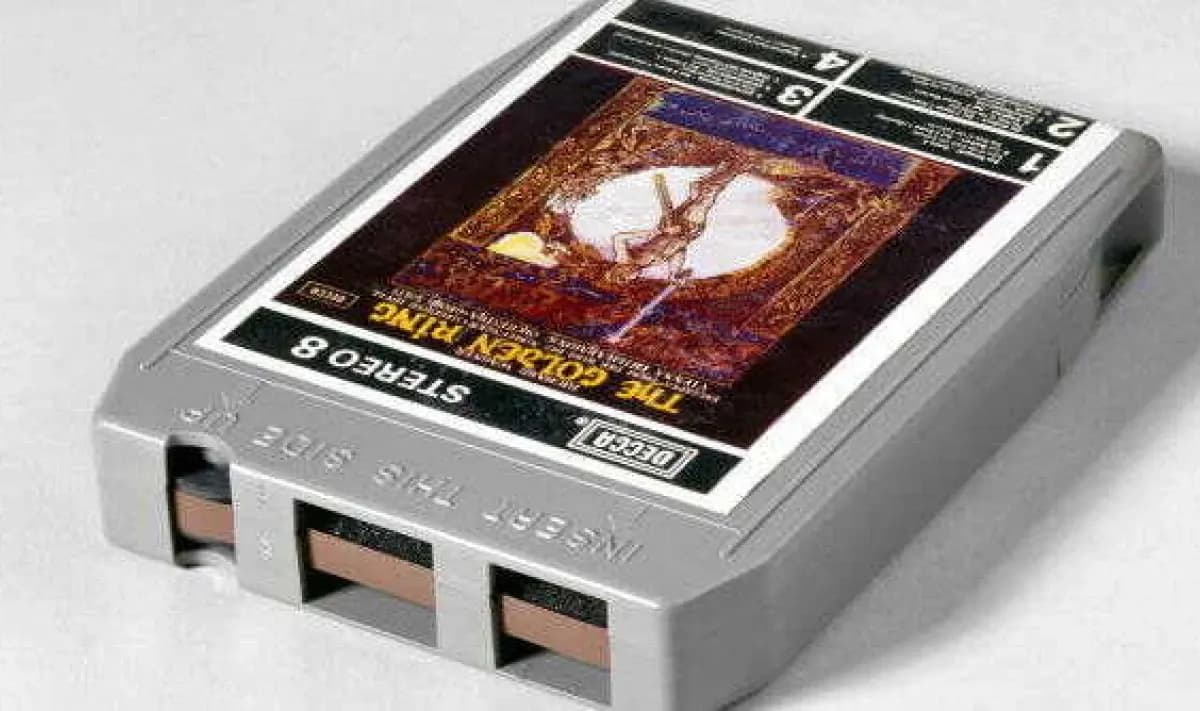
Ask someone when the 8-track tape came out and you will often get a shrug, or a guess somewhere in the 1970s. The real answer is a little earlier: the 8-track cartridge was developed in 1964 and reached shops and cars in 1965. For about fifteen years it was the way millions of drivers took their own music on the road, and then it vanished almost completely. Here is how it started, why it caught on, and why it lost out to the humble cassette.
The quick answer
Developed: 1964, by a group led by Bill Lear, the aviation entrepreneur behind the Learjet.
Launched: 1965, with Ford offering factory-fitted 8-track players in some of its 1966 models and RCA Victor releasing albums on cartridge.
Peak: the late 1960s and 1970s, mostly in North America.
Decline: by the early 1980s, the compact cassette had taken over.
Before the 8-track: music you could not take with you
In the 1950s, recorded music at home meant vinyl records, and in the car it meant whatever the radio station chose to play. A turntable could not cope with a moving vehicle; every bump would make the needle jump. Reel-to-reel tape sounded good but was far too fiddly for a dashboard. What people wanted was a sealed tape you could push into a slot and forget about.
The idea that made this possible was the endless-loop cartridge. In the 1950s, George Eash developed the Fidelipac cartridge, which wound tape in a continuous loop so it never needed rewinding. Radio stations adopted cartridges of this kind for adverts and jingles. In the early 1960s, the entrepreneur Earl "Madman" Muntz built on the same principle with his four-track Stereo-Pak cartridges and players for cars.
Bill Lear and the birth of the 8-track
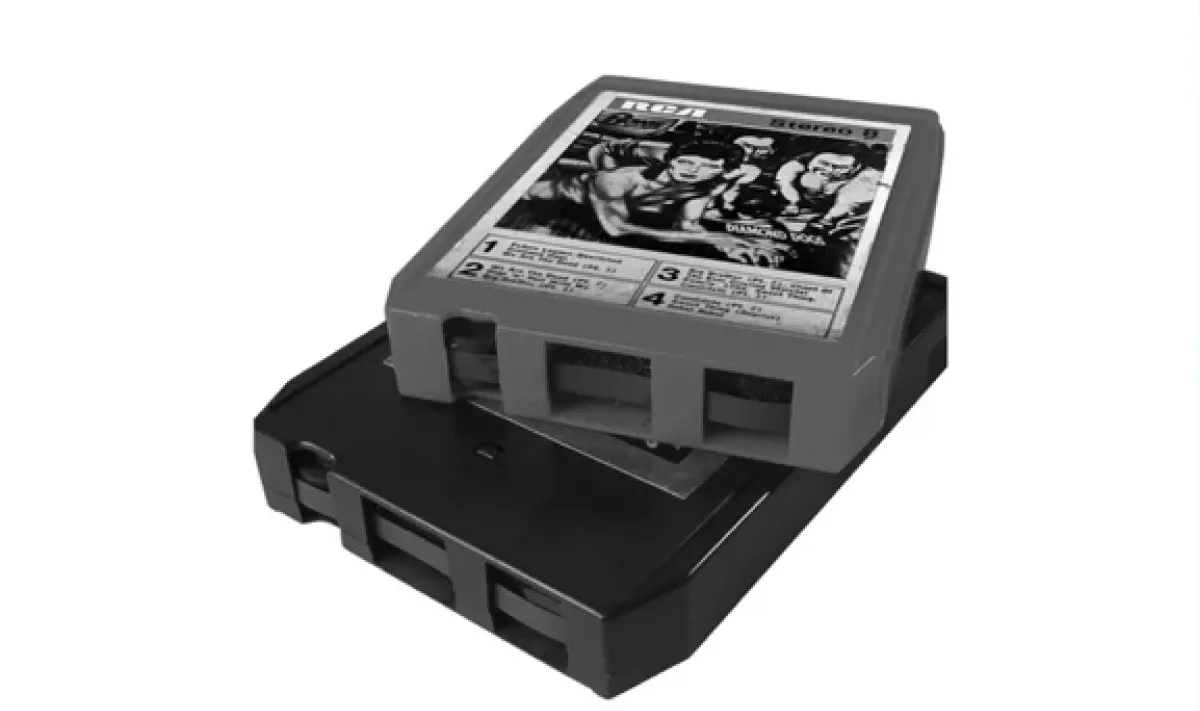
Bill Lear saw the commercial potential of the in-car cartridge and set out to improve it. His team redesigned the mechanism to make it more reliable and doubled the number of tracks from four to eight. Eight tracks meant four stereo programmes on one loop of tape, so a single cartridge could hold a full album. The player switched between programmes by moving its head, which produced the famous clunk partway through a song.
Lear did not do it alone. He brought in Ampex, Motorola, which made the players, and two very important partners: Ford, which agreed to offer the players in its cars, and RCA Victor, which supplied the music. That combination of a carmaker and a record label is what turned a clever gadget into a mass-market format.
Why the 8-track took off
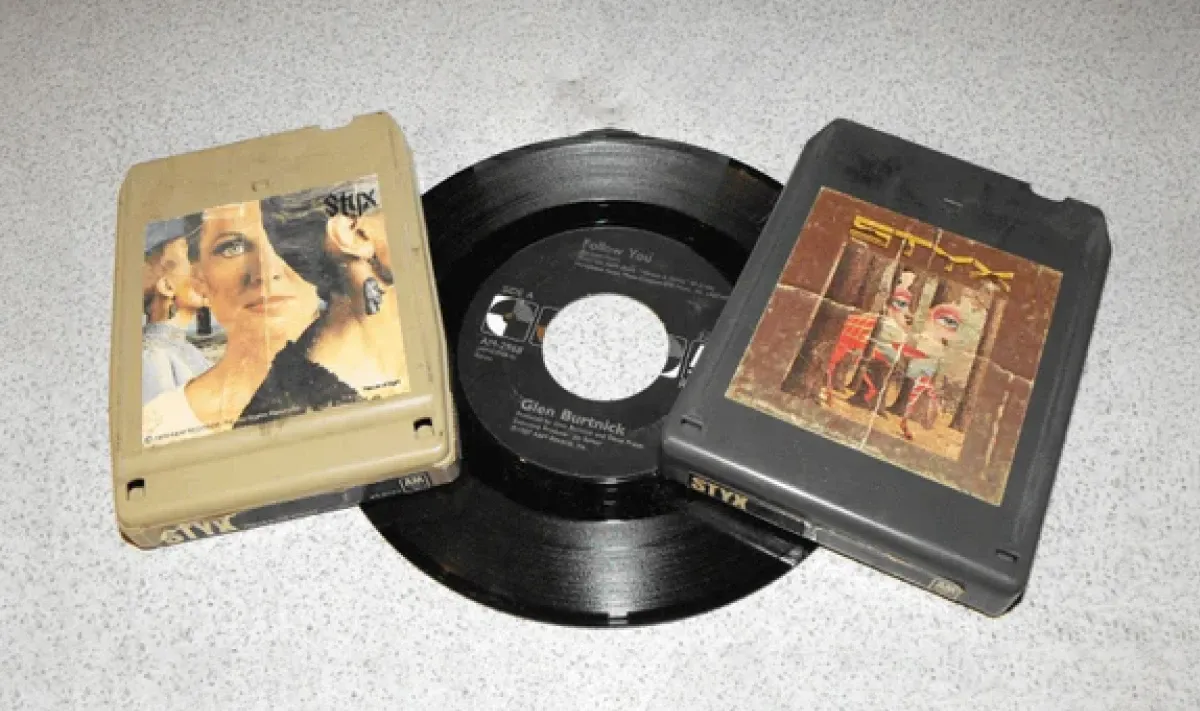
When Ford's 1966 models came out with an 8-track option, drivers could for the first time choose their own soundtrack on the road. Other carmakers soon followed, and home players appeared so that the same tapes could be enjoyed in the living room. Record labels released their catalogues on cartridge alongside LPs, and by the early 1970s the format was a major part of music sales in the United States.
Its strengths were simple:
No flipping or rewinding. The loop just kept playing, and you could press a button to jump to the next programme.
Built for cars. It didn't skip on rough roads the way a record would.
Easy to use. Push it in, and it played. No threading tape, no fragile needle.
What went wrong
The 8-track had weaknesses that grew more obvious as alternatives improved. Albums often had to be reshuffled or split to fit four equal programmes, so a song might fade out in the middle and return after the track change. You could not rewind to replay a favourite song. The pinch roller and the sensing foil that triggered track changes wore out, and tapes sometimes jammed and got chewed inside the player.
Meanwhile, the compact cassette, introduced by Philips in 1963, kept getting better. Improved tape and noise reduction made it sound respectable, it was smaller, it could rewind and fast-forward, and, crucially, ordinary people could record onto it easily. Car stereos and then the Walkman made cassettes the portable format of choice. By the early 1980s, record labels had largely stopped releasing new albums on 8-track, and the format faded into collectors' boxes.
8-track vs. cassette at a glance
Size: the 8-track is roughly paperback-sized; the cassette fits in a shirt pocket.
Playback: 8-track loops forever with fixed programme changes; the cassette has two sides with rewind and fast-forward.
Home recording: possible on 8-track but never common; easy and hugely popular on cassette.
Where it lived: 8-track was strongest in North American cars; the cassette spread worldwide, including to Hong Kong, where it dominated portable music for years.
Is anyone still using 8-tracks?
A small community of collectors still buys, repairs and plays them, partly for nostalgia and partly for that distinctive clunk. The tapes themselves are now well over forty years old, though. Loop tape and its lubricant age, pads and foam crumble, and in a humid climate like Hong Kong's, any magnetic tape stored without care can grow mould. If a tape matters to you, the safest plan is to play it as little as possible and get a good digital copy made while it still works.
Frequently asked questions
Who invented the 8-track tape?
Bill Lear's company developed it in 1964, building on earlier endless-loop cartridges by George Eash and Earl Muntz.
Which came first, the 8-track or the cassette?
The compact cassette. Philips introduced it in 1963, a year before the 8-track was developed, but the 8-track became popular in cars first.
Why is it called an 8-track?
The tape carries eight parallel tracks, read in pairs as four stereo programmes.
The same lesson applies to the tapes most Hong Kong families actually have: cassettes, DAT and open reels recorded decades ago. Capture HK transfers them to MP3 on USB so they can be played on any phone or computer. See our audio digitisation service, and if you have an unusual format such as an 8-track, WhatsApp us on +852 2882 8707 to ask before you send it.
Loading...