AI Video Dubbing Tutorial: Technical Principles, Tool Comparison, Advantages, and Limitations
With the continued growth of the short video and documentary markets, AI video dubbing—powered by natural speech synthesis and voice cloning technology—automates human voice recording, offering multilingual, personalised, and high-quality narration. This helps creators significantly shorten post-production timelines and increase content reach.
Development Background of AI Video Dubbing
In the past, video dubbing required recording studios, voice actors, and sound engineers—time-consuming and costly. In recent years, breakthroughs in deep learning algorithms have made AI speech synthesis (Text-to-Speech, TTS) and voice cloning technologies increasingly mature. These can automatically generate highly realistic speech from text and mimic specific speaker styles, quickly becoming a new trend in post-production.
1. Early TTS Technology
- Based on Concatenative TTS, which stitches together recorded segments into sentences. The quality was easily limited by the sample library.
2. Neural Network TTS
- Models like WaveNet and the Tacotron series use deep neural networks to directly learn waveforms and intonation, making synthesised speech more natural and fluent.
3. Cross-Speaker Voice Cloning
- Uses speaker embedding training with only a small amount of sample audio to achieve “one-click voice change” while preserving speech rate and intonation characteristics.
Core Technical Framework
Text Preprocessing
- Tokenisation and Punctuation: Splits input text into word groups and adds punctuation to ensure natural phrasing.
- Prosody Tagging: Adds rhythm markers such as emotional intensity, pitch, and pause length.
Speech Synthesis Models
- Tacotron 2: Converts embedded text sequences into Mel-spectrograms.
- WaveNet / WaveGlow / HiFi-GAN: Generates high-fidelity waveforms from Mel-spectrograms.
Voice Cloning Technology
- Speaker Verification: Extracts acoustic feature distributions from multiple speakers.
- Few-Shot Cloning: Mimics a voice style with only a few seconds to minutes of recorded samples.
Multilingual and Multi-Character Support
- Uses language embeddings and speaker embeddings as dual conditions to generate voices, supporting male, female, child voices, and multiple languages.
Comparison of Mainstream AI Video Dubbing Tools
| Tool Name | Core Technology | Key Features | Use Cases | Official Link |
| Google Cloud Text-to-Speech | WaveNet、Tacotron | 220+ voices, 40+ languages, SSML prosody customisation | Large-scale enterprise apps, SaaS platforms | https://cloud.google.com/text-to-speech |
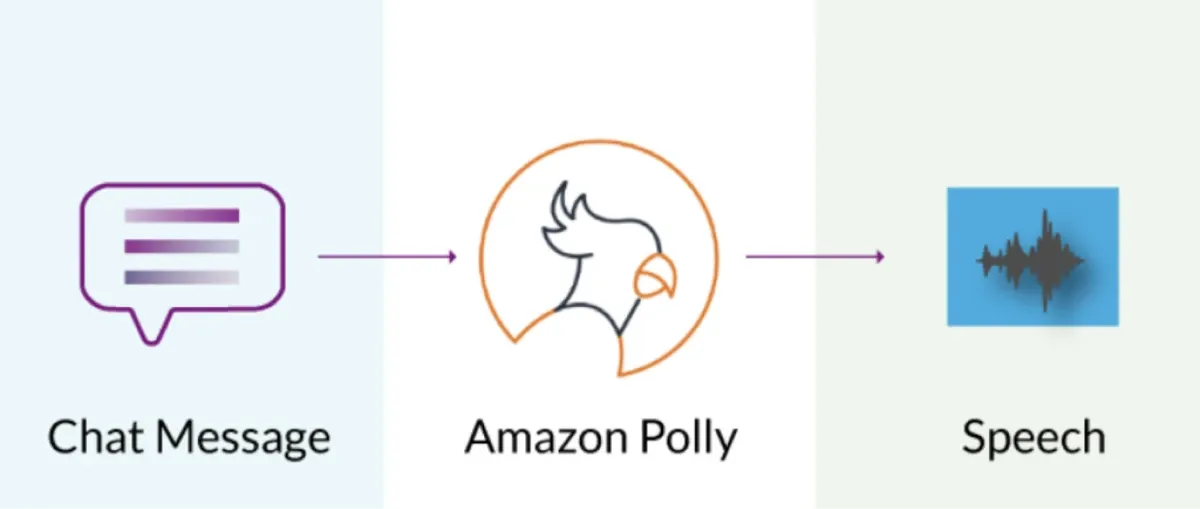
| Amazon Polly | Neural TTS、NTTS+ | Real-time streaming synthesis, prosody adjustment, speaker template import | E-commerce voice guides, customer service | https://aws.amazon.com/polly |
| Microsoft Azure Speech | Custom Neural Voice、Speech Studio | Custom speaker models, voice style transfer, emotion tagging | Corporate branding, virtual assistants | https://azure.microsoft.com/services/cognitive-services/text-to-speech |
| Descript Overdub | Proprietary Voice Cloning | Clone a voice with minutes of samples, one-click text-to-speech replacement | Podcast dubbing, internal training | https://www.descript.com/overdub |
| ElevenLabs | High-fidelity voice cloning, emotional tone control | Audio dramas, character dubbing | Audio dramas, character | https://elevenlabs.io/ |
| iSpeech | Wave-GRU model | Mobile/embedded SDK, low-latency offline synthesis | App narration, IoT devices | https://www.ispeech.org/ |
Practical Workflow for AI Video Dubbing
1. Script Writing and Prosody Planning
- Write a complete narration script and insert SSML tags at key sentences, e.g., <break time="500ms"/>, <emphasis> for emphasis.
2. Voice Selection and Sample Collection
- For voice cloning, collect at least 5 minutes of clear recordings to train the speaker embedding model.
3. Model Training and Calibration
- Train a Custom Neural Voice in the cloud or locally, adjusting prosody parameters until speech rate, pitch, and emotion are accurate.
4. Text-to-Speech Synthesis
- Convert the script into speech in segments, batch export as WAV or MP3.
5. Audio Post-Processing
- Normalise volume, remove noise, apply EQ correction, and add ambient or sound effects for immersion.
6. Video Timeline Alignment
- Import synthesised audio into editing software (e.g., Premiere Pro, DaVinci Resolve) and align with the video using subtitle tracks.
7. Quality Check and Iteration
- Have a human reviewer check pronunciation accuracy and naturalness, re-synthesising with adjusted SSML tags if needed.
Case Studies
Case 1: Multilingual Corporate Promotional Video
An international hotel group needed to dub its Chinese promotional video into English, Japanese, and Korean.
- Used Google Cloud TTS with multilingual SSML support for one-click conversion while maintaining consistent emotion.
- For key segments, fine-tuned prosody using Amazon Polly’s NTTS+ model to enhance brand professionalism.
Case 2: Online Education Platform
An online course platform expanded into international markets by using Descript Overdub to clone instructors’ voices, eliminating the need for repeated recordings.
- Generated AI voices alongside multilingual subtitles, saving 60% in studio costs and reducing post-production time by 70%.
Advantages and Challenges of AI Video Dubbing
Advantages:
- Cost and Efficiency: Eliminates studio and voice actor scheduling costs, reducing turnaround from days to minutes.
- Consistency and Control: Maintains a unified brand voice and allows quick adjustments to emotion or speech rate.
- Scalable Multilingual Output: Prepare text once and generate voices in multiple languages for global content distribution.
Challenges:
- Realism Limitations: Few-shot cloning may still produce unnatural intonation or articulation, requiring manual fine-tuning.
- Legal and Licensing Issues: Voice cloning involves rights to likeness and voice, requiring consent and compliance with laws.
- Audio-Visual Synchronisation: Dubbing must match video pacing closely to avoid mismatched viewing experiences.
Future Trends and Outlook
- Real-Time Interactive Dubbing: Combining speech recognition and synthesis for multilingual real-time translation and dubbing in live streams or online classes.
- Immersive Multi-Character Audio: AI generating multiple character voices simultaneously for animation, games, and virtual live streaming.
- Emotion-Adaptive Engines: Integrating emotion recognition to automatically adjust prosody curves based on video dynamics.
- Low-Resource Models and Offline Deployment: Developing lightweight TTS models for mobile or edge devices to enable high-quality dubbing without internet access.
Preserve Your Precious Memories with Capture’s Photo Album Digitisation Service
Do you have a box full of old photographs, worried that they may fade or get damaged over time? Now, you can preserve these treasured memories by digitising them with Capture.HK’s professional photo album digitisation service. Our service allows you to convert your old photos into high-quality digital files, ensuring they are safely stored and easily shareable.
At Capture.HK, we use high-resolution scanning technology to restore your photos with sharp details and vibrant colours, maintaining their original quality. We also offer various file formats, making it easy for you to access and share them across different devices. Most importantly, we handle your photos with utmost care, ensuring they are safely processed and preserved.
The Frame Digital Photo Frame
Want to relive your digital memories every day? Capture’s The Frame digital photo frame is the perfect solution! Designed to showcase your most cherished moments, The Frame allows you to display a lifetime of memories in one elegant frame.
With its sleek design and high-resolution display, The Frame offers an effortless way to organise and enjoy your favourite photos. Simply digitise your photo collection, upload them to The Frame, and enjoy your memories anytime, anywhere.
Whether placed in the living room, bedroom, or office, The Frame adds a touch of warmth and personality to your space. More than just a decorative item, it’s a meaningful gift that brings your treasured moments to life.
Get The Frame today and enjoy your memories every day!
References:
- Google Cloud Text-to-Speech Official Documentation – cloud.google
- Amazon Polly Product Overview – aws.amazon
- Microsoft Azure Speech Documentation – azure.microsoft
- Descript Overdub Feature Page – descript
- ElevenLabs Official Website – elevenlabs
Extended Readings:
Loading...