Black History Month Through the Camera Lens: Photography and Dignity
Every February, the United States marks Black History Month, and much of what we know about Black life in the nineteenth and twentieth centuries comes to us through photographs. Some were taken by people determined to be seen on their own terms; others were made by studios that recorded a community's everyday life for decades. Wherever you are reading from, including here in Hong Kong, these stories say something universal about why pictures matter and why they are worth keeping.
Frederick Douglass and the power of the portrait
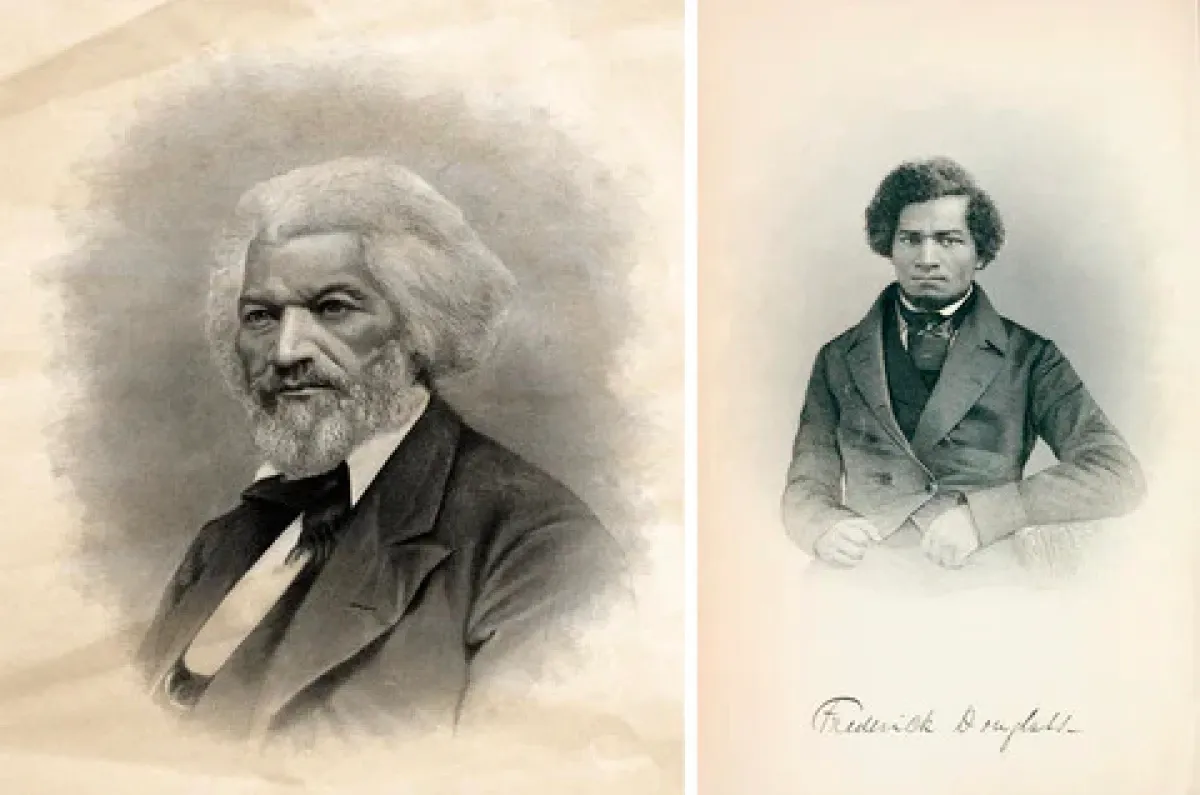
Frederick Douglass escaped slavery as a young man and became one of the most influential speakers and writers of his age. He was also a keen believer in photography. He sat for portraits again and again throughout his life, and historians have identified more than 160 separate photographs of him, which is why he is often described as the most photographed American of the nineteenth century.
This was a deliberate choice. At a time when Black people were routinely shown as caricatures in prints and cartoons, Douglass used the camera to present himself as he was: serious, dignified and in control of his own image. He rarely smiled for the lens. He also wrote and lectured about photography, arguing that a truthful picture could challenge prejudice in a way that words alone could not.
Early photographs as evidence of ordinary lives
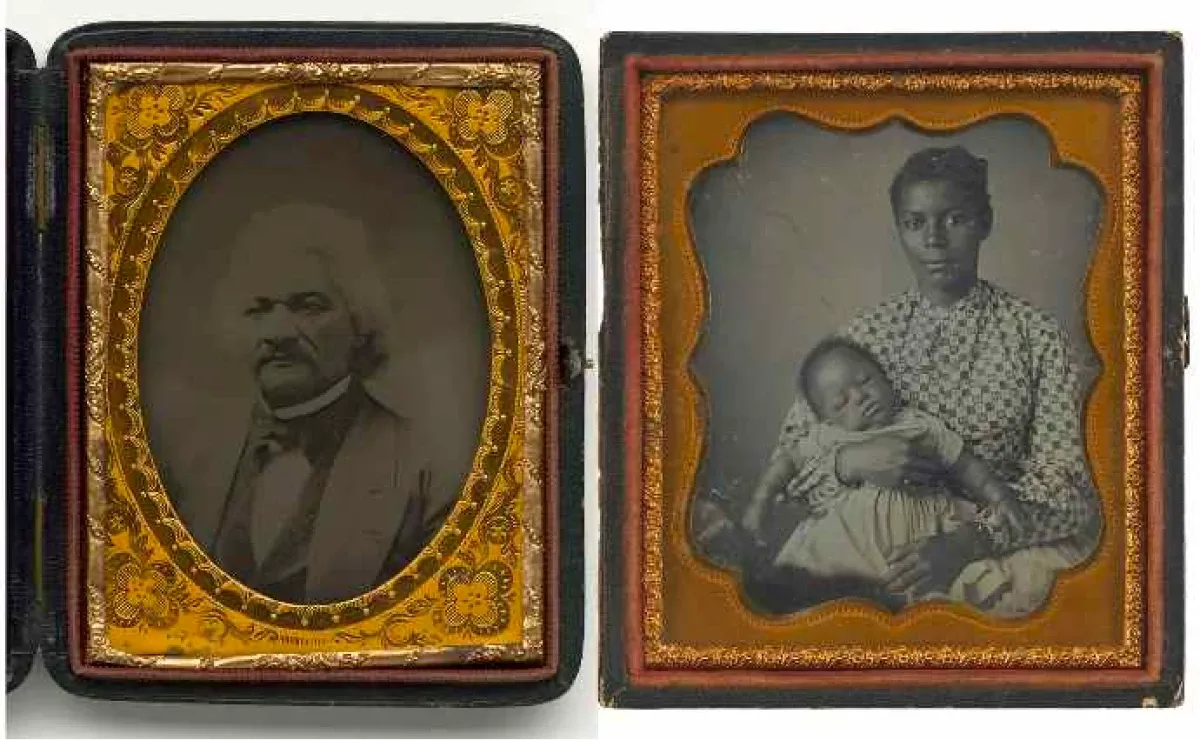
Early portraits from the collection of the Smithsonian National Museum of African American History and Culture.
Douglass was far from the only one. Across the nineteenth century, Black families, soldiers, students and workers visited photographers' studios to have daguerreotypes, ambrotypes and later paper prints made. Many of these images survive in museum collections today. The Smithsonian's National Museum of African American History and Culture has drawn on its photography holdings for a book series called Double Exposure; one volume, Pictures with Purpose, focuses on early images of African American life.
What makes these pictures powerful is how ordinary many of them are: a mother with a child on her lap, a young man in his best suit, a couple on their wedding day. When the people in front of the camera chose how to dress, pose and present themselves, the photograph became a record of who they were and who they hoped to be.
The Scurlock Studio: a community's family album
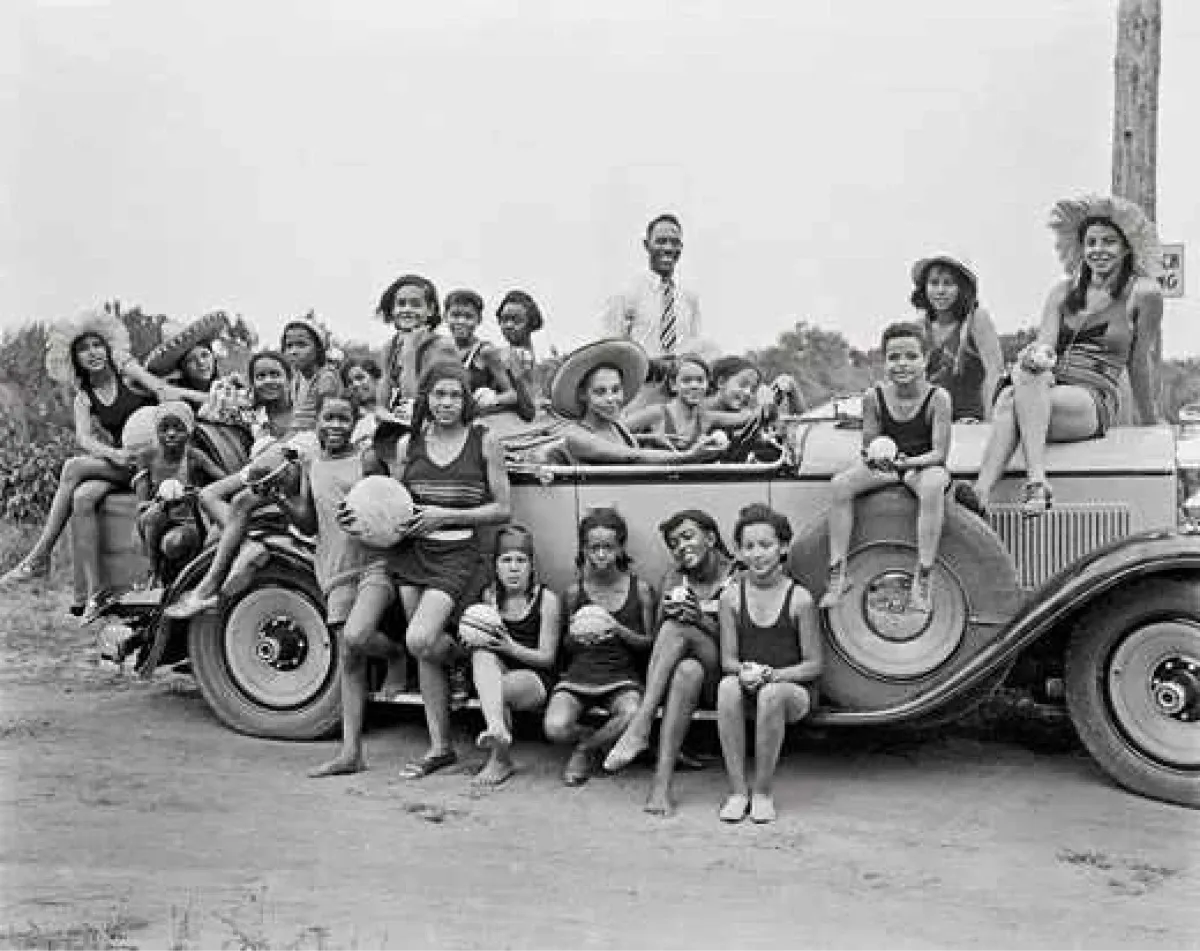
A Scurlock Studio group portrait. Scurlock Studio Records, Archives Center, National Museum of American History, Smithsonian Institution.
Addison Scurlock was a young photographer in Washington, DC, at the start of the twentieth century. After training with an established studio, he opened his own on U Street, then the heart of the city's Black community, in 1911. Later joined by his sons, the studio photographed the neighbourhood for most of the century: graduations, weddings, church groups, social clubs, babies and well-known visitors alike.
The studio closed in the 1990s, and its enormous archive of negatives and prints went to the Smithsonian. Because the Scurlocks kept their negatives, historians and families can still see that world in detail, from formal portraits to group outings. A studio's careful filing turned into one of the richest visual records of a community anywhere.
Why this matters for your own photos
None of these images would survive if someone had not looked after the prints and negatives. The same is true in every family. Many Hong Kong households have studio portraits from old neighbourhood photo shops, wedding albums from Chinese restaurant banquets, and boxes of prints from trips and festivals. They are a family's history in pictures, and they are fragile.
Humidity is the main threat. In Hong Kong's damp months, mould can spread across prints and negatives. Store them in a dry cabinet or an air-tight box with silica gel.
Label while people still remember. Ask older relatives who is in each photo and when it was taken, and write it down.
Keep the negatives. As the Scurlock archive shows, negatives often hold more detail than the prints made from them.
Make digital copies. Scans can be shared with relatives overseas and kept in more than one place, so a single flood or typhoon can't wipe out the collection.
A month to look back
Black History Month is a reminder that photographs are more than keepsakes. They let people tell their own story and let later generations meet them face to face. Taking time this month to sort, label and protect your own family pictures is a small way of doing the same for the people you love.
When you are ready to preserve your family's prints, albums, slides or negatives, Capture HK scans them into high-resolution digital files, even photos stuck in albums or frames. Find out more on our photo digitisation page.