[Primary One Interview Portfolio] Content, Self-Introduction & DIY Guide (with Sample)
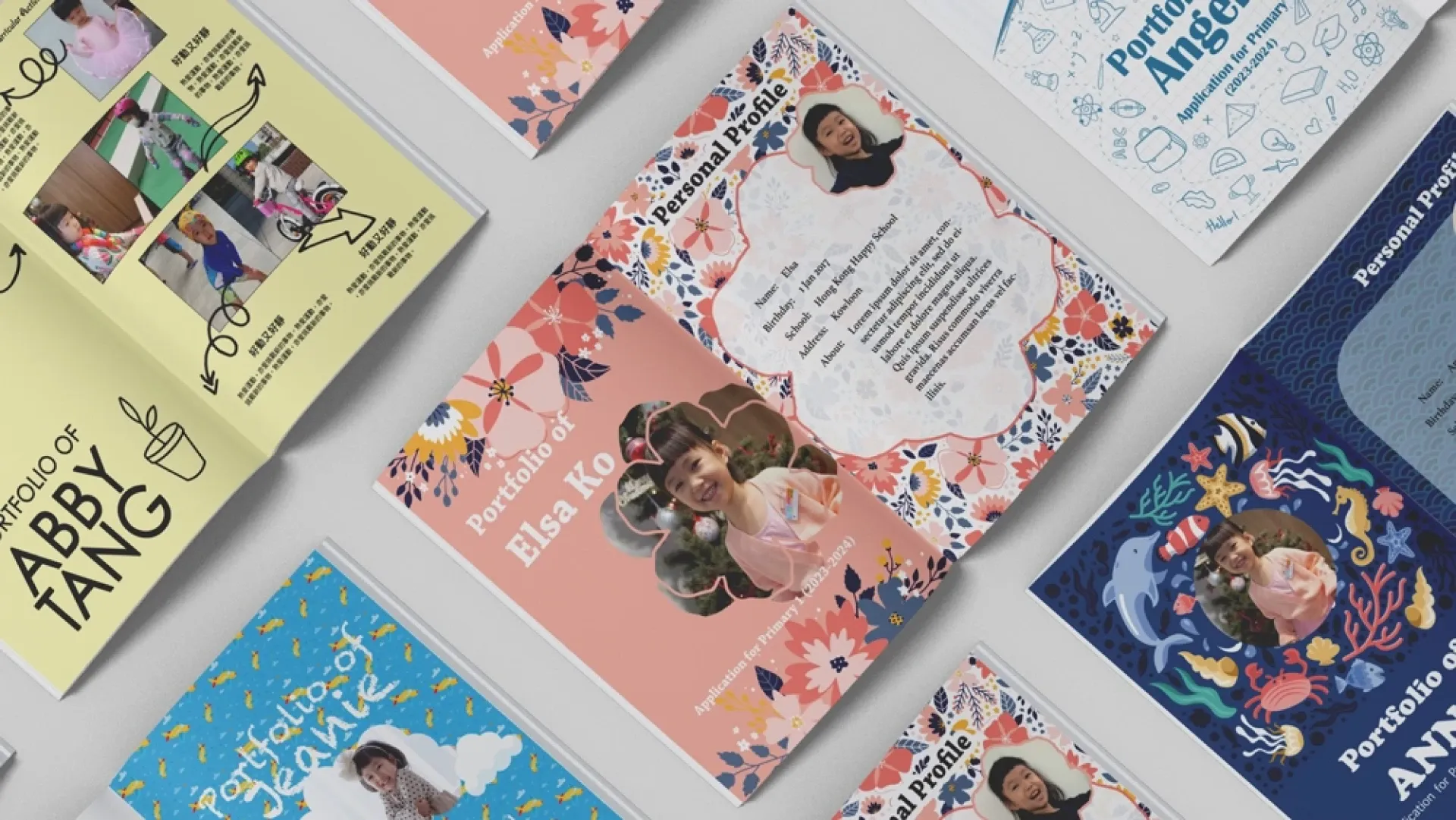
In Hong Kong’s fiercely competitive education landscape, the Primary One admission interview is a major milestone for children. A well-prepared Portfolio often makes the difference between a successful application and one that’s overlooked. A Portfolio not only showcases a child’s academic performance, interests, and personality, but also leaves a strong first impression on schools. Whether you’re applying to Direct-School-Admission (DSA) schools, private institutions, or through the “knock-at-the-door” stage, a concise, clear, and sincere Portfolio will add points to your child’s application. This article covers page-by-page content suggestions, free app recommendations for creation, and practical sample templates, so parents can efficiently produce a professional Portfolio and help their child stand out.
Recommended Portfolio Content for the Primary One Interview
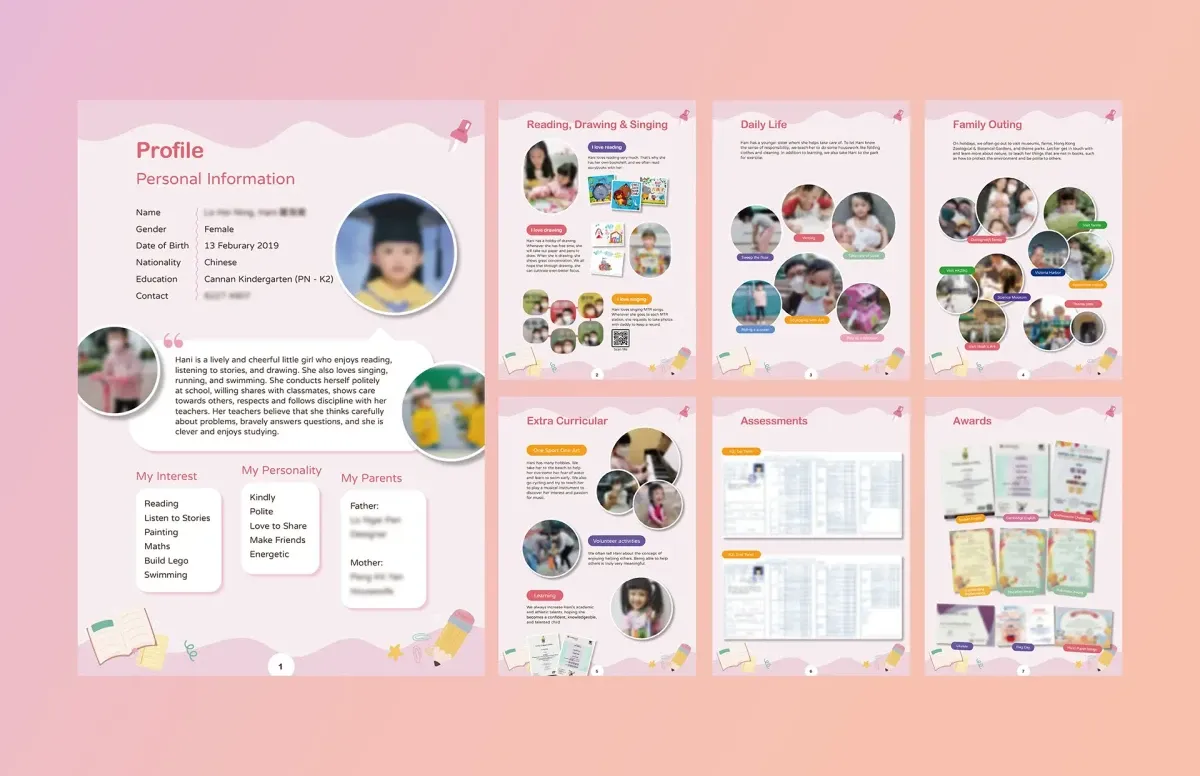
An excellent Portfolio should be focused and concise—ideally 4–6 pages—to keep the interviewer’s interest. Based on advice from Hong Kong education experts, here’s what each page should include:
Page 1 – Cover
The cover is the Portfolio’s first impression and should be simple and elegant, including the following elements:
- The child’s full name (in Chinese and English), date of birth, and a formal or candid personal photo (a smile is recommended to convey warmth).
- A simple title, such as “[Child’s Name]’s Primary One Admission Portfolio.”
- Optionally, the school’s name or logo (if targeting a specific school) to show thoughtfulness.
- Design suggestion: use soft colour tones, avoid overly flashy patterns, and maintain a professional look.
Page 2 – Personal Details & Letter of Introduction
This page presents the child’s basic details and personal traits:
- Basic Information: Name, age, kindergarten name, and contact details (parent’s phone number or email).
- Letter of Introduction: Written in the first person by the child or parent, briefly describing the child’s personality, interests, and reasons for applying to the school. Example: “My name is Chan Siu-Ming. I am a lively, eager-to-learn five-year-old boy who loves drawing and reading. I hope to join your school because I really enjoy your science experiment classes.”
- Suggestion: Keep the content sincere and avoid exaggeration. Aim for 100–150 words.
Page 3 – Academic Performance & Growth Record
This page showcases your child’s kindergarten achievements and developmental milestones:
- Include teacher comments, a summary of report card grades, or key points from learning reports.
- Display 1–2 representative work samples—handwriting, crafts, or artwork—to highlight your child’s effort and creativity.
- Suggestion: Choose items that reflect your child’s learning attitude, such as teacher notes praising “attentive listening in class” or “active participation in group activities.”
Page 4 – Interests & Extracurricular Activities
This page highlights your child’s interests and well-rounded development:
- List 2–3 main interests—such as music, sports, or art—and include corresponding photos (e.g., piano performance or soccer match).
- Briefly describe what your child gained from each activity, for example: “Joining the choir taught me teamwork.”
- Suggestion: Avoid listing too many activities; focus on the child’s passion and growth experiences.
Page 5 – Awards & Certificates
Showcase your child’s achievements—quality over quantity:
- Choose 2–3 representative awards or certificates, such as an English recitation contest, an art competition, or their kindergarten graduation certificate.
- If there are no formal certificates, include photos of participation (e.g., volunteer work or extracurricular classes) and explain why it mattered.
- Suggestion: Add a brief note, for example: “Second Prize in the 2024 English Recitation Contest—boosted my confidence in public speaking.”
Page 6 – Family Life & Social Skills
This page presents your child’s family background and social abilities:
- Include 1–2 family photos or snapshots with friends to show family support and social interaction.
- Briefly describe a family activity or value, e.g., “Our family enjoys weekend hikes, which nurtured my love for nature.”
- Suggestion: Avoid oversharing personal details; focus on the child’s happiness and ability to get along with others.
Free Apps for Creating a Primary One Interview Portfolio
You don’t need expensive design software—many free mobile apps offer simple, user-friendly layout tools, ideal for parents with no design experience. Here are three popular free apps, all supporting A4-size export for easy printing.
Canva
Canva is a powerful free design tool offering a wide range of A4-sized templates—ideal for creating your Portfolio:
- Features: Built-in education-themed templates; customisable text, images, and backgrounds. The free version includes enough assets to cover most Portfolio needs.
- How to use: Select an “A4 Document” template, drag in your photos and type your text, then download as a PDF for printing.
- Advantages: Easy to use, supports Chinese input, and the templates look professional and attractive.
- Download: Free on iOS and Android; some premium assets require payment.
Adobe Express (formerly Adobe Spark Post)
Adobe Express is a free design app perfect for quickly producing a polished Portfolio:
- Features: School-specific templates; add photos, text, and simple animations; supports high-resolution export. The free version lets you remove watermarks.
- How to use: Choose a “School” category template, adjust the layout and upload photos, then download as a PDF or JPG.
- Advantages: Quick sign-in via Google or Facebook; beginner-friendly.
- Download: Free on iOS and Android; some advanced features require payment.
Microsoft PowerPoint
PowerPoint is familiar to many parents, and the free mobile version is sufficient for basic Portfolio design:
- Features: Supports A4 slide dimensions; insert photos, text boxes, and shapes—great for a clear, structured Portfolio.
- How to use: Start with a blank slide, set the page size to A4, add your content slide by slide, then save as a PDF for printing.
- Advantages: Free and easy to use—no need to learn a new app.
Download: Free on iOS and Android; requires a Microsoft account.
Suggestion: Keep layouts clean and avoid too many graphics or colours. Print on high-quality A4 paper and check for any blurriness or cropping issues.
Primary One Interview Portfolio Sample Reference
Here’s a sample layout inspired by expert advice, suitable for Hong Kong DSA or private school interviews:
Sample Structure
- Cover Page:
- Title: “Chan Siu-Ming’s Primary One Portfolio”
- Photo: A front-facing, smiling portrait of the child
- Background: Light blue or beige, with a simple border design
- Text: Child’s name, date of birth, and name of the target school
- Personal Details & Letter of Introduction:
- Title: “About Me”
- Content: Child’s name, age, kindergarten name, plus a 100-word self-introduction (e.g., “I am a curious child who loves reading science picture books and taking swimming lessons. I hope to join your school to learn more about nature.”)
- Photo: A natural shot of the child in class or during an activity
- Academic Performance & Interests:
- Title: “My Learning & Interests”
- Content: Brief note on kindergarten performance (e.g., “My teacher says I ask good questions”), one sample of artwork or handwriting, plus a list of two interests (e.g., “Piano: 1 year of lessons, I love performing for my family”)
- Photo: The child playing piano or drawing
- Achievements & Family Life:
- Title: “My Growth Story”
- Content: Two representative achievements (e.g., “First Prize in the 2024 Kindergarten Storytelling Contest”) and a brief family activity note (e.g., “I enjoy picnicking with my family, where I learned about sharing and teamwork”)
- Photo: Award ceremony snapshot and family outing photo
Production Suggestions
- Tailor to the school: If you’re applying to multiple schools, you can include each school’s unique features (e.g., “I admire your school’s STEM program”) on the cover or in your letter of introduction to show a targeted approach.
- Keep it concise: Limit each page to 2–3 photos and 50–100 words to avoid overcrowding.
- Be genuine: Avoid copying online templates or overstating your child’s achievements—schools value sincerity and individuality.
How to Prepare Your Portfolio
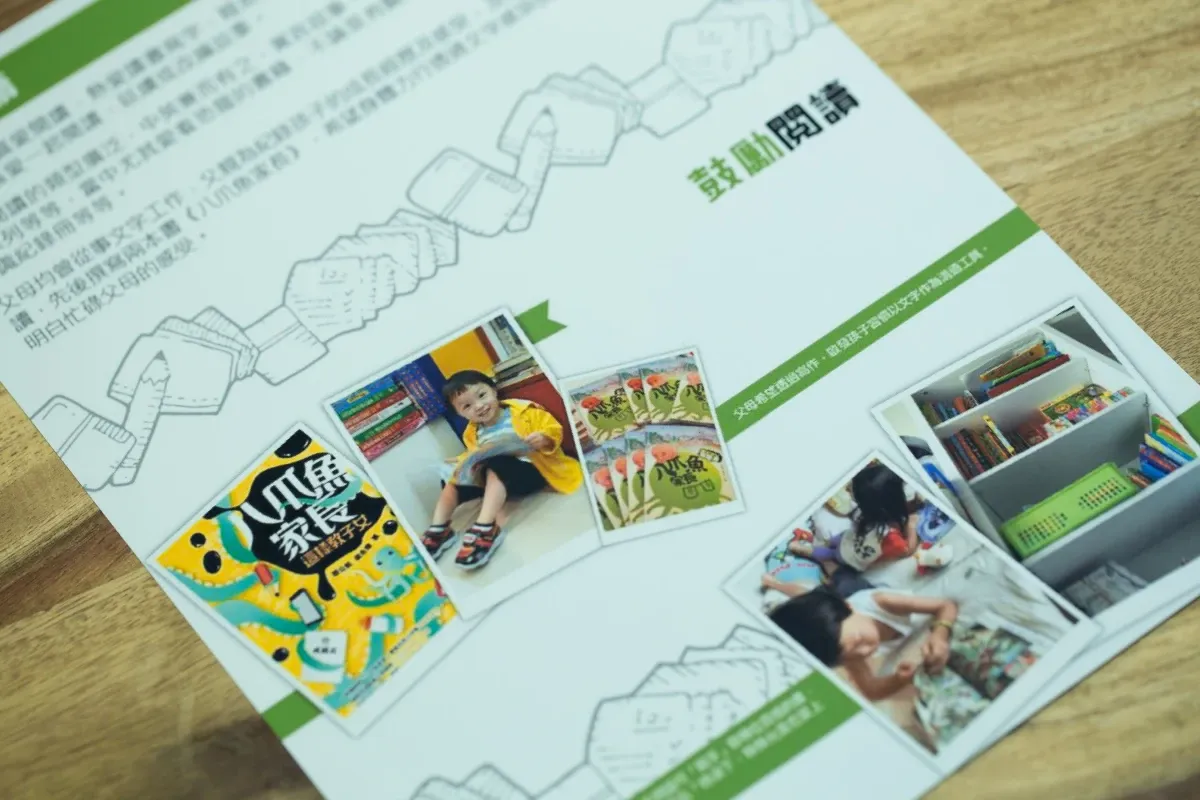
To ensure smooth Portfolio preparation, parents are advised to start gathering materials 2–3 months in advance, such as kindergarten reports, photos, and certificates. When creating, follow these steps:
- Gather materials: Organise your child’s artwork, awards, and life photos, choosing items that best reflect their personality and growth.
- Choose tools: Design with Canva or Adobe Express—select simple templates to keep the layout clean and professional.
- Write content: Draft the letter of introduction from your child’s perspective in simple, sincere language; use third-person narration on the other pages to highlight key points.
- Review and print: Have friends or teachers proofread to catch typos or blurry images. Print in A4 size on high-quality paper.
At the interview, parents can encourage their child to familiarise themselves with the Portfolio and prepare a simple introduction, for example: “This is the sunflower I drew; painting makes me very happy.” If the school requires an electronic copy, make sure the PDF file size does not exceed 10 MB.
Preserve Your Precious Memories with Capture’s Photo Album Digitisation Service
Do you have a box full of old photographs, worried that they may fade or get damaged over time? Now, you can preserve these treasured memories by digitising them with Capture.HK’s professional photo album digitisation service. Our service allows you to convert your old photos into high-quality digital files, ensuring they are safely stored and easily shareable.
At Capture.HK, we use high-resolution scanning technology to restore your photos with sharp details and vibrant colours, maintaining their original quality. We also offer various file formats, making it easy for you to access and share them across different devices. Most importantly, we handle your photos with utmost care, ensuring they are safely processed and preserved.
The Frame Digital Photo Frame
Want to relive your digital memories every day? Capture’s The Frame digital photo frame is the perfect solution! Designed to showcase your most cherished moments, The Frame allows you to display a lifetime of memories in one elegant frame.
With its sleek design and high-resolution display, The Frame offers an effortless way to organise and enjoy your favourite photos. Simply digitise your photo collection, upload them to The Frame, and enjoy your memories anytime, anywhere.
Whether placed in the living room, bedroom, or office, The Frame adds a touch of warmth and personality to your space. More than just a decorative item, it’s a meaningful gift that brings your treasured moments to life.
Get The Frame today and enjoy your memories every day!
References:
- Primary One Interview | How to Prepare Your Primary One Interview Portfolio? 4 Must-Have Sections to Make a Great First Impression – eugenebaby
- How to Create a Primary One “Knock-at-the-Door” Interview Portfolio? (with Downloadable Sample) – tutortime
- Primary One Interview | DIY Guide to Crafting a Beautiful Portfolio with Free Apps – parentingheadline
- Primary One Admission 23/24 | 3 Top Mobile Apps to Easily Complete Your Primary One Admission Portfolio – ohpama
- Primary One Interview Portfolio | Expert Step-by-Step “Knock-at-the-Door” Guide + 3 Free Apps for Simple Layout – topschool
- How to Create a Primary One Interview Portfolio – getsetparents
- Primary One Portfolio | How to Make a Portfolio That Stands Out? Admissions Experts Share Suggestions & No-Nos – champimom
- Primary One Knock-at-the-Door | Expert Suggestions for Portfolio Creation: 3 Free Apps for Effortless Layout – topick
- Primary One Interview | Three Essential Elements of a High-Quality Portfolio – ohpama
- Primary One Interview Portfolio | Wong Kam Fai Primary & Secondary School First to Use AI for Admissions: Experts Share 3 Key Creation Techniques + 8 Essential Sections – topschool
Extended Readings:
- 【Which family photo studio is good?】 Top 10 recommended family portrait studios + FAQs
- 【Studio Recommendation】Top 10 themed photo studios for rent in Hong Kong! Graduation photos, family portraits, and more
- Photography Techniques: Understanding Aperture, Shutter Speed, ISO, Shooting Angles, and Backlight Management
Loading...